
What Producers Ask Us Most About Multi-Camera Event Feeds
One question comes up on almost every enquiry: what do we actually need to send you, and what do we get back? Here are the plain answers on switched coverage of stages and large events.
Tom Eccleston · · 6 min read
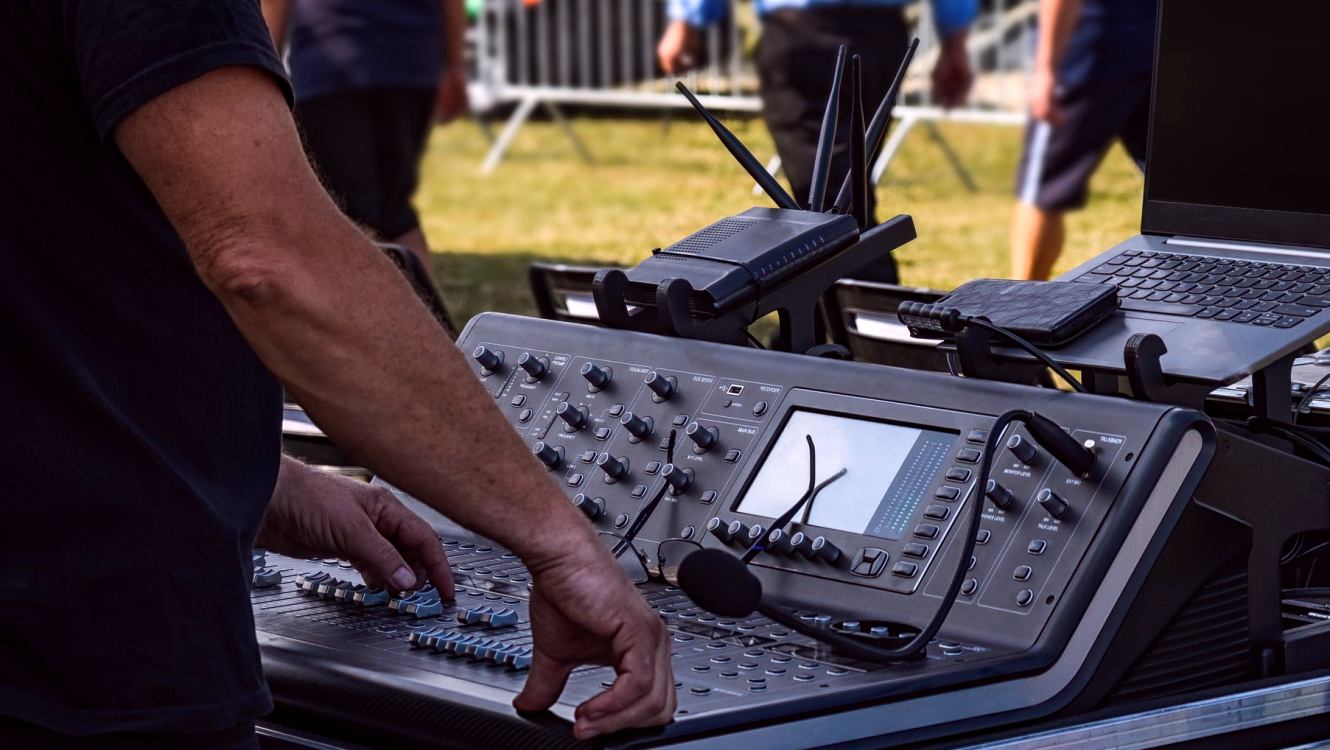
The question we hear most often
Almost every enquiry for switched event coverage begins the same way: what do you need from us, and what will we receive at the end? It sounds simple, yet the honest answer has several parts, so it is worth setting out in order. A multi-camera feed is a single programme line built from several cameras, cut live by a vision mixer, and handed to a broadcaster in a form its control room can take without further work.
The client usually has a picture in mind of a finished show. We have a picture of a signal chain: cameras, cables or wireless links, a switcher, a monitoring position and an outgoing path. Our first job is to connect the two. That means asking about the venue, the running order, the destination and the format the programme team expects, before any figure is quoted.
This note is written by Tom Eccleston, who schedules deliveries and handles hand-offs with broadcaster control rooms, so it leans towards what happens at the receiving end as much as the stage.
What we need to know before quoting
The most useful thing you can send is the running order, even in rough form. It tells us how many acts or segments there are, where the pauses fall and whether anything overruns. Alongside it, a venue plan or a few photographs of the stage, the audience area and the likely camera positions let our crew judge sight lines and cable runs before anyone travels.
We also ask who will receive the feed and in what form. A programme team may want a clean switched programme only, or it may want the individual camera outputs recorded as well so that an edit can be built afterwards. Those are different jobs with different crew and equipment, and settling them early avoids a revised quotation later.
Finally, tell us about access. Load-in times, power, rigging limits and any rules the venue sets on cameras in the audience all shape how many operators we send and when they arrive.
- Running order or schedule, however provisional
- Venue plan or photographs of stage and audience area
- Destination and delivery format wanted
- Whether individual camera recordings are needed as well
- Load-in times, power and any venue restrictions
How many cameras is enough
Clients often ask for a camera count as if more were always better. In practice the right number follows the event. A single speaker on a lit stage can be covered well by three positions: a wide shot, a medium shot and a close-up. A concert with a full band, a crowd and moving performers may justify five or six, including one that can roam.
Each camera adds an operator, a cable or link, a monitor on the switcher and a decision for the director every few seconds. Beyond a certain point the picture does not improve, because the mixer cannot use every angle, and the extra positions simply raise the cost and the risk of a fault.
We would rather recommend a smaller rig that is monitored properly than a large one that is stretched thin. If the budget is fixed, we say which angles to keep and which to drop, and we explain what the programme would lose.
What you receive at the end
The deliverable depends on what was agreed, but the usual result is a switched programme feed sent live to the broadcaster, with a recording of the same programme kept as a backup. If the brief includes isolated camera recordings, those are stored separately and passed on after the event, labelled by position so an editor can find them.
Live delivery goes by the route the receiving control room has asked for: satellite, fibre or a secure internet transfer. Tom confirms the route, the test time and the contact on the receiving side in advance, and a short line check is run before the doors open so that any problem appears while there is still time to fix it.
Afterwards we send a short note listing what was delivered, what was recorded and where the files are held. That record is useful if a question comes up about a particular moment.
Questions about sound, graphics and delays
Producers regularly ask whether we handle sound. Our feeds carry audio, but the quality of the sound depends on its source. Where the venue already has a mixing desk, we take a clean feed from it, which is almost always better than microphones placed to catch the room. If the event has no such feed, we raise this early rather than discover it on the day.
On graphics, such as names and captions, it is best to decide who supplies them. Some programme teams add them downstream; others want them on the feed itself. We can only do the second if the text and its timing are provided ahead of the event.
Delay is the last common worry. Every link adds a little, and a satellite route adds more than fibre. We tell you the expected figure for the chosen route so the studio can plan its cues.
What to do in the weeks before an autumn event
Mid autumn brings earlier darkness and unsettled weather, and both affect event coverage. Outdoor stages lose natural light by late afternoon, so cameras need to cope with a changing exposure and artificial lighting that may not have been designed for broadcast. Ask the lighting supplier about colour consistency and flicker well in advance.
Rain is the other consideration. Camera positions need cover, cable runs need protecting and connectors need to stay dry. We plan for this as a matter of routine, but a venue that offers covered positions makes our work simpler and the picture more reliable.
If you are still deciding, send us the running order and the venue details through the contact page. A written quotation follows, and nothing is committed until you confirm it.
The most common question has a short answer: send us the running order, the venue details and the destination, and we will tell you which cameras, which crew and which delivery route suit the event. What you receive is a switched feed built for the receiving control room, with a backup and a clear record. Ask early, ask plainly, and we will answer in the same way.
More from the newsroom
Getting a Finished Feed to the Broadcaster: A Practical Delivery Guide
A step-by-step look at choosing between satellite, fibre and secure internet transfer, and what to settle with the receiving control room before the feed leaves the venue.
Getting Finished Feeds to Broadcasters Through the Darker Months
As autumn weather sets in, delivery paths need more thought than in summer. Daniel Okafor explains how to choose and test satellite, fibre or secure internet routes before the winter schedule fills
Live Signal Management: A Checklist Before You Decide
Before you commit to a live signal provider, work through these questions on routing, monitoring, backup paths and hand-offs so the feed stays stable from venue to studio.