
Getting Finished Feeds to Broadcasters Through the Darker Months
As autumn weather sets in, delivery paths need more thought than in summer. Daniel Okafor explains how to choose and test satellite, fibre or secure internet routes before the winter schedule fills
Daniel Okafor · · 5 min read
Why delivery deserves a second look this season
Mid autumn is when programme schedules tighten. Evening bulletins start earlier in the dark, outside events move indoors or into half-lit car parks, and the weather begins to test every link between a venue and a broadcaster's control room. From the signal operations desk, this is the point in the year when I like to sit down with producers and walk through how a finished feed will actually leave the building.
Content distribution is the last step in our chain, and it is the one the audience never sees. A well-shot, cleanly switched programme is only useful if it arrives intact, on time and in the format the receiving control room expects. Satellite, fibre and secure internet transfer each handle the coming months differently, and the choice is worth making early rather than on the day of the shoot.
Satellite in wet and windy weather
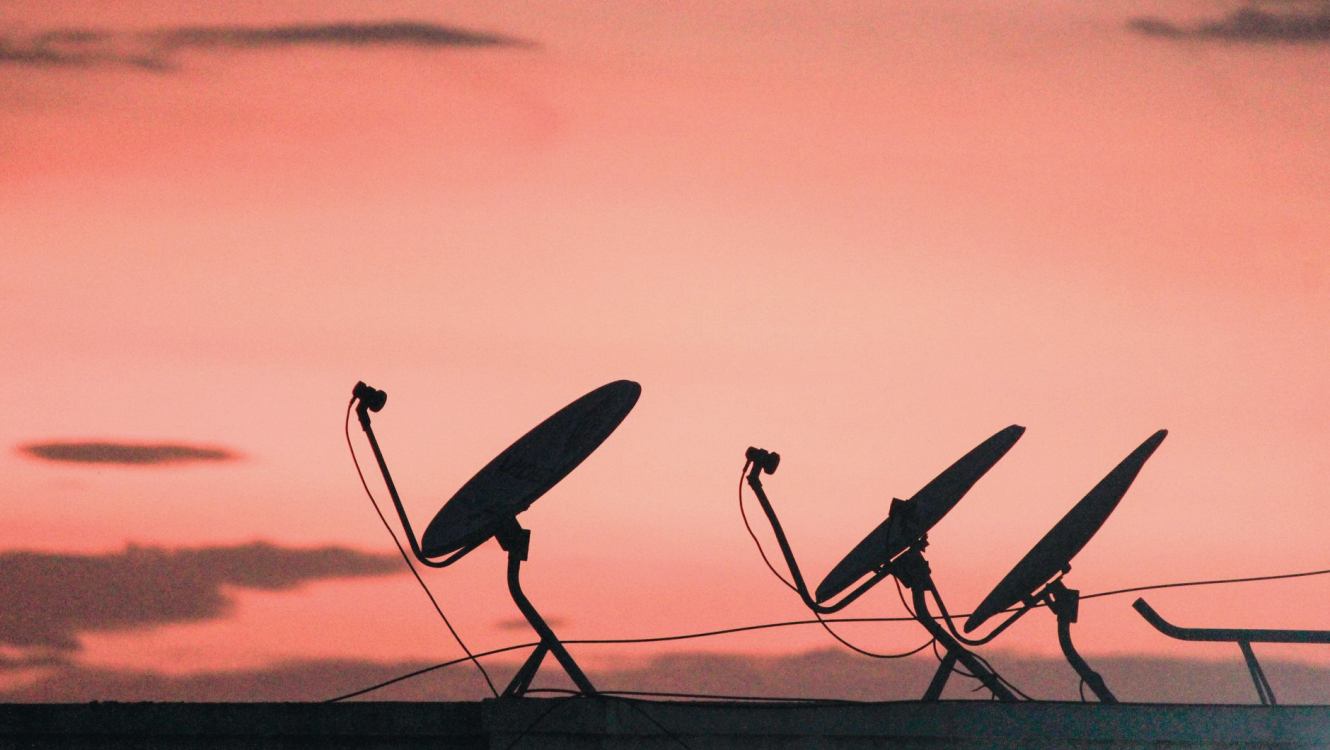
Satellite remains the most widely available route when a venue has no dependable cable connection. It is also the route most affected by weather. Heavy rain, wet snow on a dish and strong gusts can all degrade a signal, and low winter sun angles in the afternoon can bring their own interference near certain times of day.
If you rely on an uplink for a live inserts or an evening event, we plan extra margin into the link and check the dish position against nearby trees, buildings and cranes during the site visit. We also agree a fallback with the receiving broadcaster before anything goes to air. Satellite is perfectly sound in autumn, but it should never be the only plan you have written down.
- Walk the dish position in daylight, not at set-up time
- Keep the link margin generous in rain and wind
- Agree a named fallback route with the broadcaster
Fibre: steady, but only if it is booked in time
Fibre gives a very stable path, and in the colder months stability counts for a lot. The catch is lead time. A circuit into a venue that has no permanent connection must be ordered, installed and tested, and installers are busiest as the year winds down. Leaving the request until a fortnight before an event is how feeds end up on a second-choice route.
When a venue is used regularly, such as a theatre, a hall or a sports ground, we ask the producer whether a circuit can stay in place across the season. Where a one-off booking is unavoidable, we raise the request as soon as the date is firm, and we confirm the hand-off point with the broadcaster's control room so that nobody is hunting for a patch panel on the evening itself.
Secure internet transfer for quicker turnarounds
Secure internet transfer suits finished clips, packages and recorded programmes that do not need to arrive in real time. It is the route Tom Eccleston schedules most often, because it lets us deliver to several broadcasters from one location without extra hardware. Autumn is a good time to use it, as shorter days produce more recorded material for the late bulletins.
Its weakness is the connection at the sending end. Venue wifi is not a delivery path, and shared mobile networks slow down just when a crowd arrives. We test upload speed on site, deliver from a dedicated line where possible and keep an encoded copy ready in case a transfer drops partway through and has to restart.
- Test upload speed at the real time of day, not at the site visit
- Never route a delivery over public venue wifi
- Keep a second encoded copy ready to resend
Choosing between the routes for your own programme
There is no single best route; there is the one that suits your timing, your venue and your receiving broadcaster. A live insert wants fibre or a well-planned satellite link. A packaged piece for a later bulletin is usually better served by secure transfer. A multi-venue weekend might well use all three, with a different path for each.
We usually start with three questions: when must the feed arrive, what format and delivery point does the broadcaster require, and what happens if the first route fails. Once those are answered in writing, the choice is rarely difficult. If a producer is unsure, a short call with our distribution desk before booking is more useful than a long email chain afterwards.
Testing before the schedule gets crowded
The most useful habit I can recommend this season is a test delivery. Send a short piece of the same format and length over the route you intend to use, receive it at the other end and check it with the control room. It costs little and catches mismatched formats, wrong file names and closed ports long before they matter.
In the weeks ahead, broadcasters' own engineers have less room for last-minute fixes, so a rehearsed hand-off earns its keep. We keep notes on each broadcaster's preferences from previous deliveries, and we share them with clients so that a producer new to a particular control room does not start from nothing.
- Send a short test in the final format over the chosen route
- Confirm file naming and delivery point in writing
- Note the control room contact for the day
Autumn does not make delivery harder, it makes mistakes more expensive. Pick the route early, book fibre while installers have room, treat satellite with a sensible fallback, and test every transfer before the date that matters. If you would like to talk through a route for a coming programme, the distribution desk is happy to go through it with you.
More from the newsroom
What Producers Ask Us Most About News Programme Support
The question we hear most from news producers is how fast a live insert can really be arranged. Here is the plain answer, with what we need from you and what shapes the timing.
What Producers Ask Us Most About Multi-Camera Event Feeds
One question comes up on almost every enquiry: what do we actually need to send you, and what do we get back? Here are the plain answers on switched coverage of stages and large events.